

Teacher Gift Tag Freebie


Do you know Marley? By age 11, she had started a social media revolution, bringing awareness to authors and readers alike. She was on a mission to find books with African American book characters that looked like her that she could enjoy, and share with her friends all over the world.
A few short years later, she was an accomplished author, national speaker, and child literacy advocate.
Your students will love reading about Marley this week, and you’ll love the Reading Comprehension Test Prep Passages they receive as they read all about her amazing journey to finding #1000blackgirlbooks.
Do you know Marley? By age 11, she had started a social media revolution, bringing awareness to authors and readers alike. She was on a mission to find books with African American book characters that looked like her that she could enjoy, and share with her friends all over the world. A few short years later, she… Continue reading FREE Black History Reading Comprehension Worksheets

When you hear the word fluency, most of us immediately think about primary grades and DIBELS.
But did you know that fluency is a critical comprehension component in upper elementary, intermediate, and middle school? Students that struggle with their fluency, will automatically struggle with their comprehension abilities.
Let’s take a quick trip down Fluency Lane as I share my favorite ways to practice and review reading fluency strategies in upper elementary and middle school classrooms.
Reading fluency is the ability for a student to read at the proper rate (according to time of year and grade level), the students’ ability to read with accuracy, and the students’ ability to read with prosody.
Rate: Rate refers to the proper speed: not too fast and not too slow. Students shouldn’t read like a robot, and they shouldn’t sound like the Micromachine Man from the 1990’s commercial, either. (Please tell me you know who I’m referring to.) The rate, or speed, at which a student reads relates to the grade level they are in and whether it’s the beginning, middle, or end of the school year.

Accuracy: Accuracy means students can correctly read the words on a page, with the fewest amount of errors at their grade level.
Prosody: Prosody means students are able to use correct tone, expression, and inflection in their voice to convey feelings and emotions of the text as they read it aloud. Students can correctly use the “stop signs” of punctuation to signal the prosody of their voice.
Most of your students will fall somewhere between the 75th and 90th percentile in reading fluency at any given time during the school year. To help boost your classroom’s fluency and comprehension skills, here are 4 of my favorite reading fluency strategies for my students to practice that have proven to improve their reading fluency and comprehension skills in my upper elementary and middle school classroom.
1. Read Aloud Each Day
I know this sounds almost ridiculous to even type out and for you to read, but reading aloud to your students even 5-10 minutes each day is an excellent way to model fluent reading. Even better, show the students your book using a projector or YouTube video so they can read aloud with you. This way, they are seeing the words and punctuation. It exposes your students to new vocabulary and schema, not to mention kids just love to be read aloud to. Choose a chapter book or even picture books are perfect! I have a FREE list of picture book read alouds for 3rd-6th graders you can download that kids (and teachers) love!
2. Students Record Themselves Reading
One of my favorite assignments for my students is to record themselves reading their writing. First, this is excellent way for them to revise their writing. Secondly, their peers review their writing as well. Students give very specific feedback when reviewing their writing. They are to give 2 praises, and 1 way to improve the writing. The students write their 2 praises and 1 improvement, take a snapshot of the writing, upload it to SeeSaw and add an audio recording to the assignment of them reading their response. Again, this helps them practice their fluency as well. Then, they play it back and listen to themselves.
Also, another assignment I give to my students often is to record themselves reading a portion of chapter of excerpt of a passage that uses a lot of dramatic punctuation. This allows students to practice proper prosody. They record it visually and submit it through SeeSaw as well. Students give 2 positive comments on each recording, commenting on the students’ fluency. The students listen to their recordings, and can re-record as many times as necessary. Then, there is always a short comprehension question that goes along with what they have read, and typically, they have read it aloud 5 or 6 times, so they are able to use text clues to find the answer quickly.
3. Opportunity for Repetition and Repeated Reading
Exposure to grade level and academic vocabulary again and again will improve student fluency in the biggest way. Students shouldn’t just read an article or passage once; they should delve in, break it down, analyze it, and read it multiple times.
Daily re-reading of passages with longer sentences is important for students to build their fluency and comprehension. When students get ready to read a 3rd grade or 4th grade text, the sentences are more complex with bigger vocabulary and lots of punctuation. Not only should students be able to read the words with accuracy, but with prosody and an appropriate speed. They shouldn’t spend most of their time breaking down the words, sounding out the words, or trying to figure out what the words mean.
Exposure to prefixes and suffixes will build students depth of knowledge of words and their reading rate will increase as well as their accuracy. In turn, their prosody will improve because they will be able to comprehend what the author is conveying through the use of vocabulary in the text.
The best way to practice weekly repeated reading in your upper elementary classroom is through NF Article of the Week and Fiction Passage of the Week. I have created 2 different sets of passages that are perfect for building fluency, comprehension skills, and practicing finding text based evidence. The model for my Article of the Week and Passage of the Week is simple: Re-read the passage each day, modeling the reading of the text, focusing on the words in the text, using context clues, and morphology of the words. Here’s what it looks like:

I promise you you will love using these in your classroom. You’ll notice your students will become more confident in their reading abilities and they will grow in their fluency rate in no time.
4. Review the Fluency Expectations Often
Just because you have “big kids” doesn’t mean they are pros at anything yet, much less fluency as a 5th grader.
Look – just like you and I need reminders often of the speed limit *ahem*, our babies need reminders of the “Road Map” to being a fluent reader. No. Not every child. But most of them need weekly, if not daily, reminders.
Therefore, I’m sharing my simple print-and-go FLUENCY anchor chart FREEBIE with you!
This freebie includes: Anchor Chart printables, whole page printable, 1/2 page printables for student notebooks and 1/4 page printables for student notebooks
Simply print, cut, copy, and leave this anchor chart hanging for your students all year long to reference.


When you hear the word fluency, most of us immediately think about primary grades and DIBELS. But did you know that fluency is a critical comprehension component in upper elementary, intermediate, and middle school? Students that struggle with their fluency, will automatically struggle with their comprehension abilities.
Are you using read alouds with your upper elementary students? If not, please tell me what you are waiting for!?
I love using interactive read alouds with my “big kids”. I love when you get to dig into a text that seems “simple” only to find how complex the text really is. Keep reading and I will give you my 5 best read aloud picture books for upper elementary plus activities to go with them, and an amazing FREEBIE you never knew you needed!

There are so many benefits of using read alouds in your upper elementary classroom. If you have been around for awhile, you know that my motto has always been “big kids like to have fun too!” Let’s always remember that they are kids, not just data for state testing.
There are different types of genres that you can absolutely choose from when reading aloud to your students. The books below happen to be my favorite picture books for upper elementary because they all have an obvious skill to teach during the read aloud. You can check out some more diverse picture books here.
The books linked below are all Amazon affiliate links.

This is a great read aloud for teaching perspective in upper elementary. In this funny fairy tale read aloud, the wolf finally gets to tell his side of the story. It helps students understand that everyone has a different perspective regarding different situations in life.
I have used The True Story of the Three Little Pigs to teacher perspective with 3rd grade, 4th grade, 5th grade, and even 6th grade. It’s a great book that all students relate to, but the depth of conversation spans depending upon your students ability and comprehension.
I always use this Point of View-Perspective- Read Aloud lesson with this book. It allows my students to write in their interactive notebooks and even have a mock trial when reading this picture book. It also has many graphic organizers, anchor charts and tons of activities to practice perspective taking in class!


The stranger that Farmer Bailey hits with his truck has some strange connections to the weather…could it possibly be Jack Frost? This picture book read aloud is really great for helping to teach the skill of inferencing.
Use these inferencing activities that go with it and you will be set with 5 days of lesson plans! In addition, it comes with exit tickets, writing prompts and even test prep.

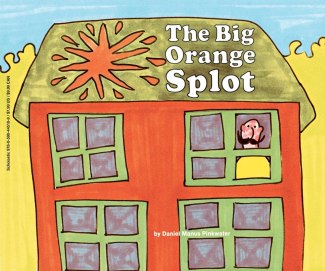
Next, try teaching your 3rd, 4th, 5th or 6th graders what a theme is by using the book The Big Orange Splot. It’s a great story about individuality, accepting others differences and respect for those around us.
I use these Lessons on Teaching Theme to introduce my students to this skill and use the mini lesson when reading The Big Orange Splot.


Are you looking for an Interactive Read Aloud that is rigorous, fun, and prepares your students for state testing? Try reading The Sweetest Fig to your students to teach them the concept of character traits plus get some more practice on identifying the theme of a story.
Do you want 6 days of detailed lessons over teaching theme and character traits? This unit even comes with tons of extension activities!


One of the other skills that I absolutely love to teach to upper elementary students during a read aloud is comparing and contrasting two different books by the same author. For example, above you could use the two books by Chris Van Allsburg to compare and contrast. I have also used Click, Clack, Moo: Cows that Type and Giggle, Giggle, Quack both by: Doreen Cronin.
I use this Compare and Contrast Unit to teach students how to compare and contrast the characters, setting, conflict, resolution and theme of two different picture books by the same author.

If you’re looking for even more read alouds that would be perfect for 3rd grade, 4th grade, 5th grade, or 6th grade, click below to grab a FREE list of even more Read Alouds for Upper Elementary!
Tell me, what are your favorite books for read alouds in upper elementary?
Are you using read alouds with your upper elementary students? Check out 5 best read aloud picture books for upper elementary + activities to go with them!

Do you teach your upper elementary and middle school students how to take notes from an online article? I have created a special strategy for this that I want to share with you today. It’s called the 4 Square Method and it makes note taking from an online article a breeze for my students!
(Pssst…Scroll to the bottom for a 4 Square FREEBIE!)

The 4 Square Strategy is a note-taking strategy that I created in order to help teach students how to annotate or collect information from an article that is on a computer screen. This is also an online test-taking strategy that I like to teach upper elementary students.
Unfortunately, someone that gets paid more than the teachers do decided that children in 3rd-6th grade don’t need to take paper/pencil tests anymore. #RIDICULOUS. Therefore, I created this method to help my babies organize their thinking to best answer the test questions.
As we are prepping for the test, I use my Reading Comprehension Test Prep Passages with my students as we practice the 4 Square Strategy. I created this resource to mirror the state test. It has Part A/B questions, longer sentences, rigorous vocabulary, and text dependent questions. However, it’s fun and engaging with articles about Fortnite, rolled ice cream, Snapchat, and the Titanic. If you want to learn how I use this test prep resource in my own classroom, check out this post here.

Here’s how to teach the Four Square Method for taking notes to students:
First before they do anything else, have students draw a huge 4 square template on their page for taking notes. This literally looks like a giant plus sign or lowercase letter t. This gives them 4 boxes to take notes in using the four square strategy.
In the box at the top left corner, they should write the key words from the article. This might be any words that are in bold, words that are repeated a lot throughout the article or any underlined words. These are words that are critical to the main idea of the text. Students should do this after they have read the article through at least once or twice.
After identifying the key words, students will have a better understanding of the main idea of the text. They should write that in the top right box of the 4 square. Have them use their key words that they identified to help them with this, as well as any context clues. Students should reference the text features in the passages as well to help them identify the main idea or central idea of the text.
Next, under that box in the bottom left box, students will take notes on the author’s purpose and perspective. Is the purpose of the article to inform us, persuade us or entertain us? This, in turn will let us know if the article is fiction or nonfiction. In addition, what is the author’s perspective? Have students look for positive and negative words and figure out how the author feels about the text.

Finally, in the last four square box at the bottom right, students can write any key details and notes that were important to them from the text. This is important that they jot their own notes down about what they read also. It helps to increase their comprehension of the text. I typically have them do this using bullet points.
After the students complete the 4 Square Method, they are ready to use their annotated notes to guide their thinking when it comes to answering the questions about the text. If there is a constructed response, the students have already recorded key words that will help guide their writing as well.
Some EXCELLENT *FREE* Websites to Practice Online Annotations with your Students:
CommonLit.org – EXCELLENT free site for test prep practice; it provides data and LOTS of excellent feedback for you and students. Get on it, sister.
DOGO News – Current event articles that would engage students, but also in an online format
FREE Scholastic Magazine Articles – Because…everything on this site is amazing!
If you think this 4 Square Method would be beneficial to your students for state testing, grab your copy below by clicking on the image.

What kinds of strategies do you teach your students for taking notes?

Do you teach your upper elementary students how to take notes from an online article? Read all about the 4 square strategy and grab a FREE TEMPLATE to use!